Clear scope before major work
We explain what is wet, what can be dried, and what must be removed so you can make decisions with real information.
Serving Nashville, Tennessee & surrounding areas
Flood cleanup in Nashville, TN
Fast water removal, professional drying, and clear next steps after a flood or burst pipe. We document conditions, protect what can be saved, and move the property toward safe, dry, repair-ready.
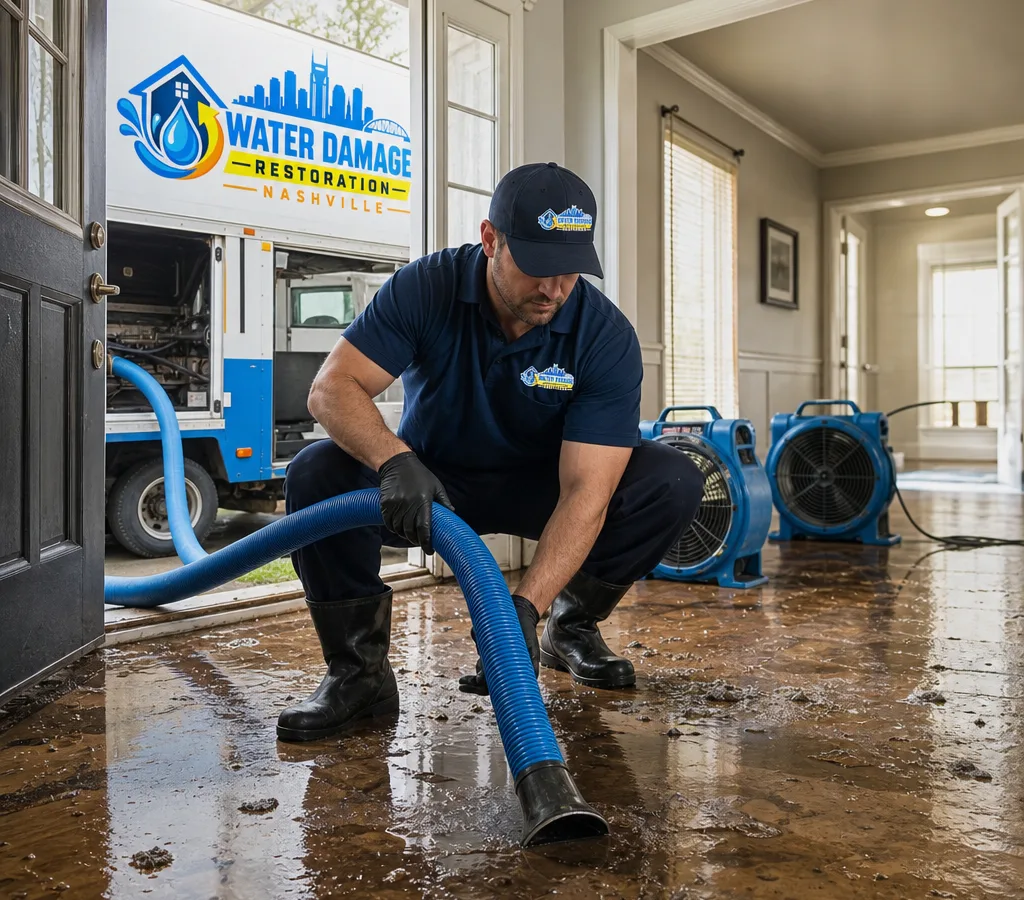
Remove the water, find where it traveled, and verify the structure is dry before repairs begin.
Immediate priorities
If you are searching for flood cleanup Nashville TN, you likely need two things right away: water out of the building, and a plan you can trust. Flooding can come from heavy rain, a backed-up drain, an appliance leak, or a burst supply line, but the priorities stay the same. Water keeps moving into baseboards, drywall, and flooring, and Nashville's humidity can slow drying and raise the risk of odor and microbial growth.
Water Damage Restoration Nashville focuses on practical, inspection-based restoration. We start by locating where water traveled, stabilizing the area, and setting up a drying strategy that fits the materials in your home. You will know what we found, what we are doing today, and what comes next.
For an overview of related restoration help and what to expect during a water loss, you can also review Water Damage Restoration to understand the wider process around drying, documentation, and repair planning.
Measured restoration
Flood cleanup is more than pumping water and placing a few fans. A proper job is built around measurement and containment.
Typical flood cleanup work includes:
What flood cleanup does not mean: painting over stains, trapping wet materials behind new drywall, or guessing when things are dry. Drying is confirmed with readings, not a calendar.
If the water source is a sewage backup or outside floodwater, the plan changes. Those situations require tighter containment, more aggressive removal of porous materials, and specific cleaning steps before rebuilding is safe.
Practical property protection
We explain what is wet, what can be dried, and what must be removed so you can make decisions with real information.
Different materials dry differently. We set equipment and airflow based on what your home is made of, not a one-size setup.
Photos, moisture logs, and notes support insurance conversations and keep repairs aligned with what actually happened.
We protect salvageable items, isolate work areas, and avoid unnecessary demolition when drying can do the job safely.
When drying is complete, we can outline the next repair steps so contractors are not rebuilding over lingering moisture.
From wet to repair-ready
We identify the water source when possible and look for immediate hazards. If breakers, outlets, or HVAC equipment were exposed to water, we keep the approach conservative until conditions are safe.
We remove standing water first because it drives most of the damage. In finished spaces, that often means extracting from carpet and pad, hard floors, and the lowest areas where water collects.
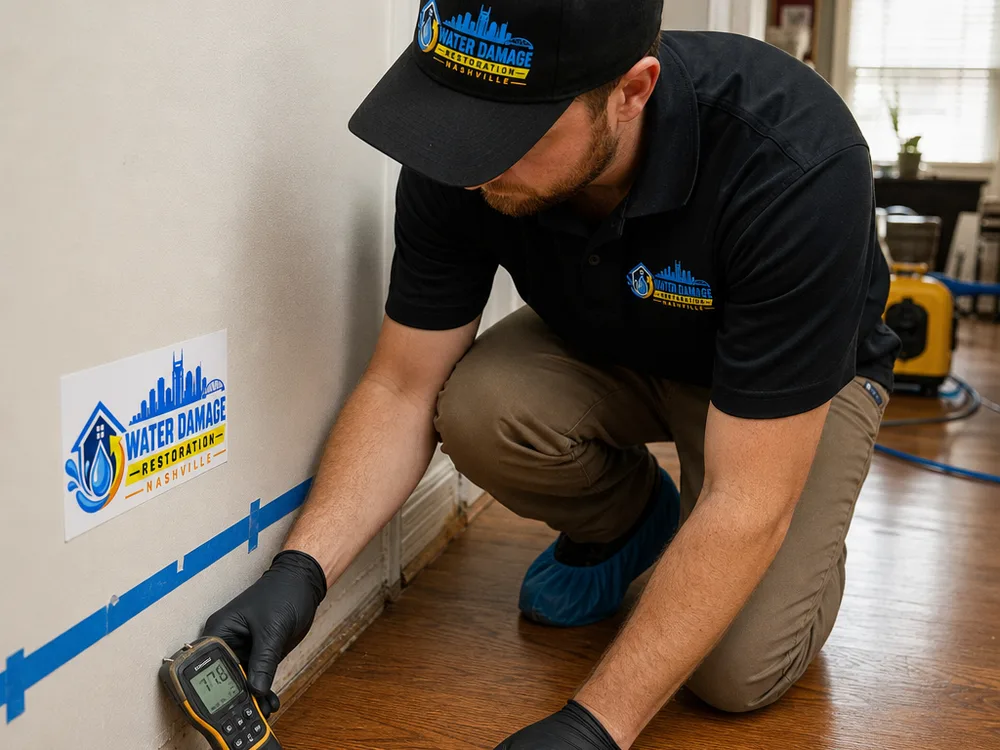
We test floors, drywall, trim, and adjoining rooms to map the footprint. This determines where containment is needed, what materials may require removal, and how much equipment the space needs.
Drying is a managed process. We monitor moisture levels and adjust airflow and dehumidification as conditions change, especially in humid Nashville weather or when the structure has multiple layers.
If the water is not clean, or if materials sat wet long enough to develop odor, we use job-appropriate cleaning and antimicrobial products on remaining structural surfaces.
We confirm drying with readings and provide a clear next step: what repairs are needed, what materials were removed, and what to watch for as rebuilding begins.
Built for local conditions
Flood cleanup in Nashville often comes down to how fast moisture gets trapped in assemblies. Basements and crawl spaces, slab-on-grade homes, and older homes with multiple flooring layers can all hold water longer than you expect.
Humid conditions can slow evaporation. That makes dehumidification and proper airflow placement more important than simply adding extra fans.
Storm-driven water can enter through doors, garages, and low openings. Adjacent rooms and wall bases must be checked where water can wick upward.
Older homes may have plaster or layered finishes that hide moisture, while slab foundations and modern finishes can trap water under LVP or engineered wood.
In multi-story homes and townhomes, we also pay close attention to vertical travel. Water from an upper-level bathroom or laundry can affect ceiling cavities and insulation below, even when the visible damage looks minor.
Request Emergency ServicePlan the scope
Flood cleanup in Nashville typically ranges from about $1,000 to $7,500+, depending on how much water entered the home and how many materials must be removed. A small, clean-water event in one room often falls near the low end, while a multi-room loss with wet drywall, flooring, and cabinet toe-kicks can move higher.
Final pricing is driven by affected square footage, water category, how long materials stayed wet, equipment needs, access, and how much demolition and disposal is required. The exact cost is confirmed after an on-site inspection and moisture mapping.
Customer experiences
“We had water come in through the garage during a storm and it spread into two rooms. They showed us where the moisture was in the walls, explained what had to come out, and kept checking levels until everything was dry. The documentation made the insurance side much easier.”
“A supply line leak soaked our floors while we were away. Their crew got the water out fast and set up drying the same day. What I appreciated most was the straight answers about what could be saved and what could not.”
Practical answers
Flood cleanup should start as soon as the water source is controlled because water keeps wicking into drywall, trim, and subfloors the longer it sits. Even when standing water looks minimal, moisture can spread into wall bases and under flooring, especially in humid Nashville conditions.
Sometimes, yes, but only when moisture readings show the materials can dry safely without trapping water. If insulation is saturated, drywall has wicked up significantly, or flooring is cupping or swelling, selective removal is often the correct approach.
Clean water is typically from a supply line or rainwater intrusion that has not mixed with waste, while contaminated water includes sewage backups or water that has passed through dirty areas. Contaminated losses require more stringent containment, cleaning, and porous-material removal.
A musty smell usually means something stayed wet too long or was sealed before it was dry. Measured drying and, when needed, cleaning and odor control after moisture levels return to a safe baseline help prevent lingering odors.
Many drying jobs take about 3 to 5 days, but the real timeline depends on materials, how much water entered, and whether water is trapped under flooring or in wall cavities. Repairs should begin after drying is verified with moisture readings.
If it is safe, stop the water source and avoid running electricity in wet areas. Move small valuables and paper items to a dry spot, keep pets away, and take a few photos of visible damage for your records before cleanup starts.
Start the drying plan
Tell us what happened and what areas are wet. We will walk you through immediate safety steps, inspect the affected spaces, and provide a written plan to remove water, dry the structure, and get your home ready for repairs.