Clear containment plan
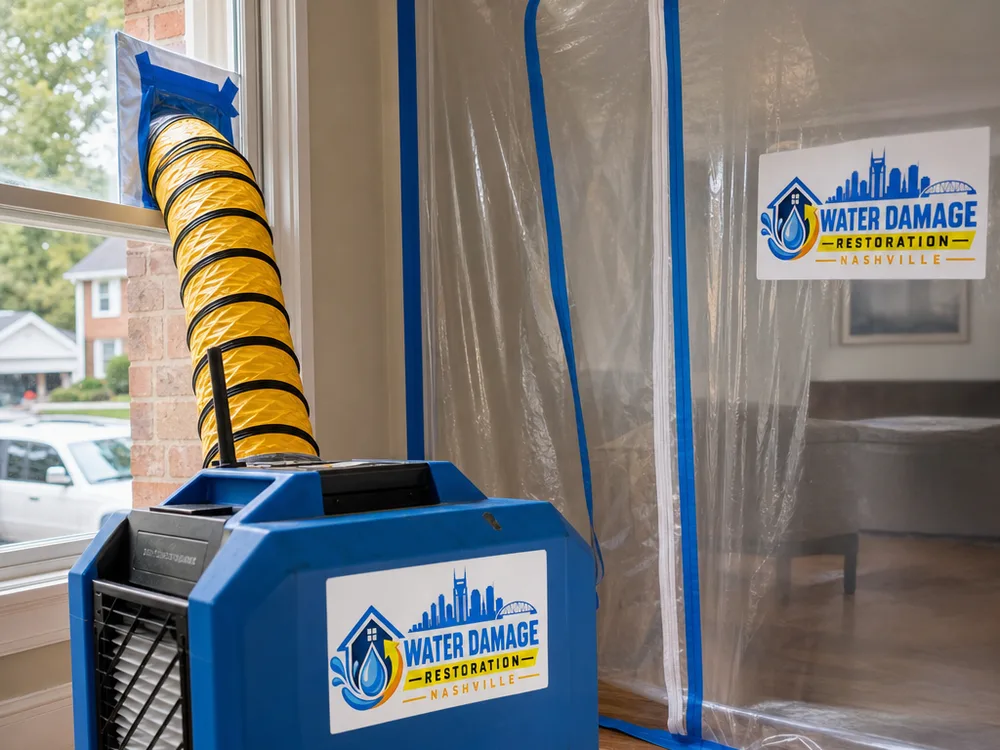
You should be told how the area will be isolated, where equipment will be placed, and how materials will be removed without tracking dust through the house.
Serving Nashville, Tennessee & surrounding areas
Mold remediation in Nashville, TN
If you are seeing staining, smelling a musty odor, or dealing with a recent leak, our Nashville team contains the problem, removes contaminated materials safely, and leaves you with a clear plan to prevent it from coming back.
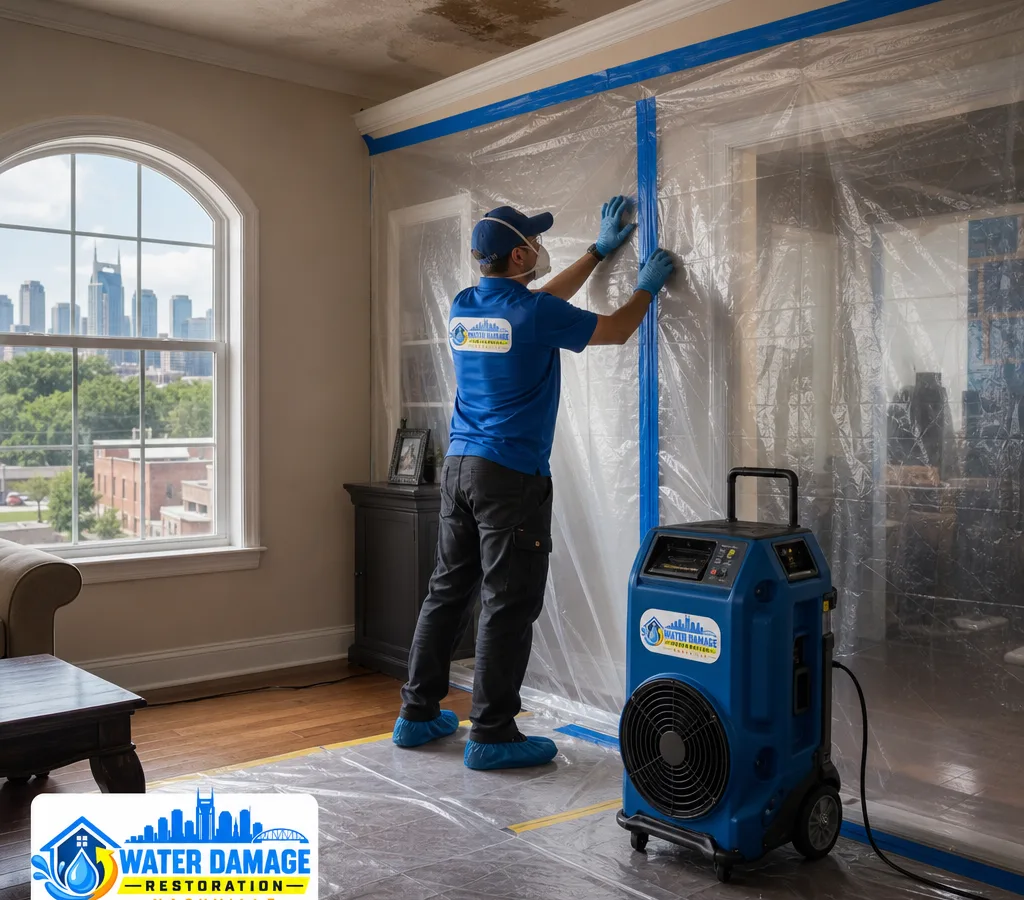
Recurring odor, visible growth, or damp porous materials call for controlled remediation—not a quick spray-and-wipe.
Know when to act
Mold remediation Nashville TN work is the right next step when you have confirmed growth, recurring musty odor, or building materials that stayed wet long enough for contamination to spread. It is also appropriate when a leak or overflow affected porous materials such as drywall, insulation, or carpet pad and the drying window was missed.
If it is a very small surface spot on a non-porous material like glazed tile and the surrounding area is dry, basic cleaning may be enough. If you see spotting on drywall, baseboards, wood framing, HVAC supply boots, or around windows, it is worth getting eyes on it. Mold on porous materials often means the contamination is in the material, not just on it.
A practical rule: if you can smell it, if it keeps coming back, or if you had a water event in the last few days and materials are still damp, treat it as a remediation job. The goal is to fix the moisture source first, then remove or clean impacted materials under containment so spores do not spread through the house.
Controlled cleanup
A proper mold remediation job is a controlled demolition and cleaning project, not a quick spray-and-wipe. Our scope is built around containment, safe removal, and verification-ready cleanup.
Typical work includes:
If mold was triggered by a leak or flood, remediation often starts with drying and stabilization so the moisture problem and mold problem are handled in the right order.
Standards that protect your property
You should be told how the area will be isolated, where equipment will be placed, and how materials will be removed without tracking dust through the house.
Removing mold without addressing the moisture that fed it is temporary. We help pinpoint where the water or humidity originates so repairs can be prioritized.
Visible staining is often smaller than the affected area. Inspection and moisture readings help keep the scope thorough without making it wasteful.
HEPA air scrubbers and vacuums are standard for remediation work, along with respirators, disposable suits, and controlled entry and exit practices.
You should leave with a written scope and notes on what was removed, what was cleaned, and what needs to stay dry going forward.
Remediation is the cleanup phase. If drywall, insulation, or trim is removed, we explain what has to be replaced before the area is fully back to normal.
Contained from start to finish
We inspect the affected area, look for the moisture driver, take moisture readings, and outline what needs to be contained, cleaned, and removed.
We isolate the work zone with plastic barriers and establish negative air pressure with HEPA filtration to keep particles from spreading.
Materials that cannot be reliably cleaned, such as impacted drywall or insulation, are carefully removed and bagged through the contained pathway.
We HEPA vacuum and clean remaining structural surfaces to create a visibly clean, dust-controlled substrate ready for repairs.
If moisture remains, we recommend or coordinate drying and dehumidification before rebuild work begins.
We review what was done, what should be monitored, and what repairs are needed, leaving you with a practical prevention plan.
Built for Nashville conditions
Mold issues in Nashville often trace back to moisture that lingers in the building. Humid weather can make basements, crawlspaces, and poorly ventilated bathrooms slow to dry, increasing the chance that a small leak becomes a larger remediation project.
Elevated humidity can affect subfloors and insulation. A musty smell that comes and goes is often connected to these areas.
Previous repairs or remodels can hide slow leaks behind tile, tubs, and cabinets until staining appears on adjacent walls.
Supply boots and ducts can sweat when insulation or air sealing is poor, leading to localized growth in closets or ceiling areas.
Across East Nashville, Green Hills, Bellevue, and Donelson, the core questions are the same: how far contamination extends, which materials are impacted, and what remains wet. A good plan starts with containment and ends with a dry, clean substrate ready for rebuilding.
Request Emergency ServicePlan the scope
Mold remediation in Nashville typically ranges from about $1,500 to $6,500 for many residential projects, with small, contained areas at the lower end and multi-room or crawlspace jobs reaching $10,000+ when removal and heavy containment are needed. Cost depends on how many square feet are affected, how much porous material must be removed, access such as an attic or tight crawlspace, and whether drying equipment is required. The exact price is confirmed after an on-site inspection and a written scope.
Request Emergency ServiceCustomer experiences
“We had a musty smell that kept coming back after a plumbing leak. They set up containment, removed the affected drywall, and the clean-up was much more thorough than what we expected. The air felt normal again once the equipment came out.”
“They explained what was actually contaminated versus what just looked stained, and they showed us the moisture readings. The plan made sense, and the work area was kept sealed off the whole time.”
Practical answers
Most mold remediation jobs take 1 to 3 days on site, but the timeline depends on how much material has to be removed and whether drying is still needed. A small, contained area can often be finished in a day, while multi-room work or crawlspace projects typically require additional setup and cleaning time.
Often you can stay if the affected area can be fully contained and you can avoid the work zone. Homes with sensitive occupants, limited ways to isolate the area, or extensive contamination usually benefit from temporary relocation during active removal.
Contaminated porous materials like drywall and insulation are commonly removed because mold can grow into them. Non-porous or semi-porous materials, including some framing or masonry, can often be cleaned under containment with HEPA methods once dry and structurally sound.
Remediation should not start until the moisture source is stopped because ongoing water can re-contaminate cleaned areas. The first step is to stop the leak and stabilize moisture, then remediate once conditions are controlled.
Yes. The scope usually includes safe access planning, containment where practical, removal of affected insulation when needed, and recommendations to control humidity or ventilation so the area stays dry.
Testing is not always required when there is visible growth and a clear moisture source. It can be useful in disputed situations, for clearance goals, or when odors suggest hidden growth without an obvious visual indicator.
Keep the affected area closed off, avoid running fans that could move dust into other rooms, and do not disturb visible growth. If safe, take photos and note when the water event happened to help define the likely extent and containment approach.
Start with clear boundaries
Tell us what you are seeing and where it is showing up. Water Damage Restoration Nashville will confirm the boundaries, explain the containment approach, and provide a written scope so you know exactly what happens next.