Rapid water extraction
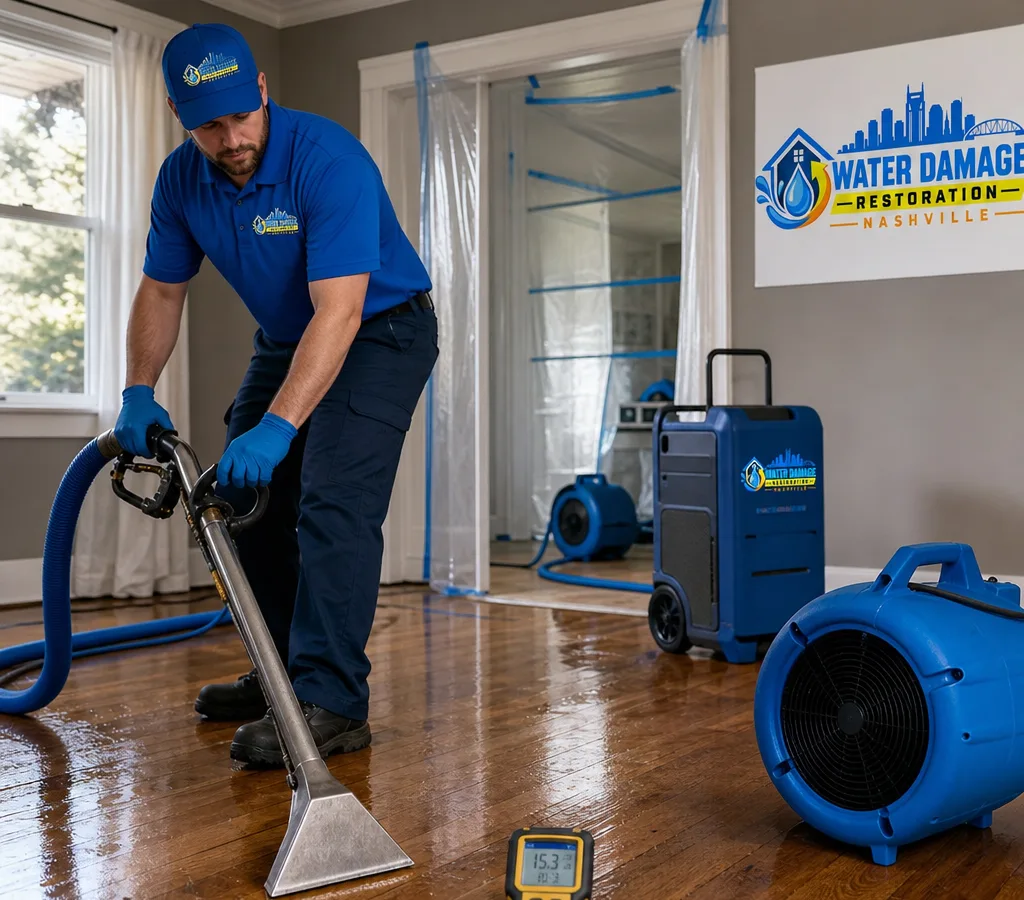
High-volume extraction removes standing water quickly, which reduces how far moisture can migrate under floors and into wall cavities.
Serving Nashville, Tennessee & surrounding areas
Water restoration in Nashville, TN
When water gets in, time matters. Our team responds fast, stops further damage, dries the structure, and documents the work so you can move forward with a clear plan.
Act before water travels farther
If you are searching for water restoration Nashville TN, you are probably dealing with an active leak, a soaked room, or water that has already moved into walls and flooring. The first goal is to stop the source when possible and remove standing water. The next goal is controlled drying, dehumidification, and moisture verification so the structure can be safely rebuilt and used again.
Water Damage Restoration Nashville handles water restoration in Nashville for common situations like supply line breaks, appliance overflows, water heater failures, roof leaks after storms, and basement or crawl space water intrusion. We work in single-family homes, townhomes, condos, and commercial spaces where water can affect multiple units or tenants.
Nashville weather can shift quickly, and heavy rain and storm runoff can turn a small intrusion into a larger wet area fast. That is why our approach centers on containment, airflow planning, and measurable drying, not just removing visible water. We also keep the process simple for you: written scope, clear next steps, and progress updates as drying readings improve.
Our company also handles related water, fire, and property cleanup work.
Professional mitigation
High-volume extraction removes standing water quickly, which reduces how far moisture can migrate under floors and into wall cavities.
Air movers, dehumidifiers, and targeted cavity drying are set based on material type and moisture readings, then adjusted as conditions change.
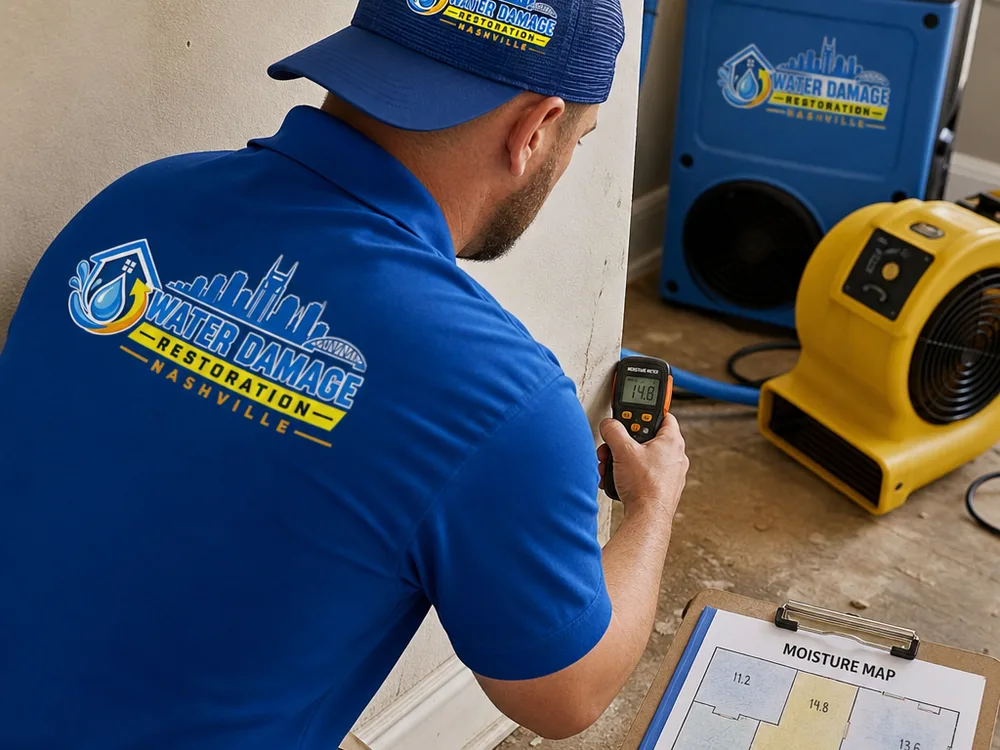
We document affected areas with photos and moisture logs so you have a record of what was wet, what was removed, and when the structure reached dry standards.
When materials are deteriorated or contaminated, we isolate the work area with plastic and filtration so odors, dust, and debris do not spread.
Wet drywall, insulation, baseboards, and flooring are assessed for salvageability. We remove only what needs to come out to dry the structure correctly.
You get a practical plan for repairs after drying, plus advice on what to do immediately—and what not to do—while restoration is underway.
Inspection, extraction, drying
A good outcome depends on the first few decisions. Water can travel through seams in flooring, wick upward into drywall, and soak insulation where it is not visible. Our restoration work is built around finding that hidden moisture and drying it under control.
Typical on-site workflow:
For properties near the Cumberland River corridor or low-lying areas where stormwater can be an issue, we pay close attention to secondary moisture in adjacent rooms and lower wall sections, since water can spread beyond the obvious wet spot.
You tell us what happened and what areas are affected. We prioritize stopping additional damage and set expectations for timing, access, and what you should move or avoid.
We inspect, classify the water source, and document impacted materials. You receive a clear scope that matches the conditions we see.
We extract water, set equipment, and establish containment when needed. Drying strategies are selected for the affected materials and saturation levels.
We track moisture content and ambient conditions, then reposition or change equipment. If something is not drying as expected, we address trapped moisture, blocked airflow, or a hidden leak.
Once targets are met, we document final readings and review any repairs or rebuild steps needed to return the space to normal use.
Plan the scope
Water restoration in Nashville typically ranges from about $1,000 to $6,000+ for many residential situations, depending on how far water spread and whether drywall, flooring, or insulation must be removed. A small, contained spill with minimal equipment time is on the lower end, while multi-room saturation or water affecting walls and subfloors pushes costs higher.
Price is driven by the water category, square footage and material type, how long the water sat, equipment days needed, access, and any demolition and disposal. The exact cost is confirmed after the on-site inspection and moisture mapping.
Customer experiences
“A supply line under our kitchen sink let go while we were out. They arrived quickly, pulled up the wet toe kicks, set drying equipment, and kept checking moisture readings until the cabinets and wall area were dry enough to rebuild.”
“We had water run into two rooms after a storm. The crew explained what they were testing, what could be saved, and what had to come out. The documentation made the whole process easier to track.”
Practical answers
Start water restoration as soon as you can, ideally the same day, because moisture can move into drywall, insulation, and subfloors quickly. In Nashville, warm and humid conditions can slow drying if the structure is not dehumidified, so early extraction and controlled drying help prevent secondary damage.
If it is safe, shut off the water source, turn off power to affected areas when water is near outlets or fixtures, and move small valuables and electronics out of wet zones. Avoid running your HVAC if return vents are pulling in damp air or debris, and avoid pulling up flooring if you are not sure what is underneath.
Most drying projects take about 3 to 5 days, but timelines vary based on material type, how saturated the structure is, and whether water is trapped in cavities. Hardwood, plaster, and insulated walls often require more monitoring and targeted drying than surface-level wet carpet.
Sometimes, if the water exposure is short and drying begins quickly with proper dehumidification and airflow control. Cupping, buckling, and water trapped under underlayment can change what is salvageable, and we confirm conditions with moisture readings rather than guessing by appearance.
Yes. Contaminated water requires stricter containment, PPE, and removal of porous materials that cannot be reliably cleaned. We classify the loss, document affected areas, and recommend the correct level of demolition and sanitation for health and safety.
We serve Nashville, TN, including East Nashville, The Nations, Green Hills, Donelson, and Bellevue, with scheduling based on travel time, access, and urgency. If you are unsure whether your address falls within coverage, share your nearest cross-streets and what happened so we can guide the next step.
Yes. We document moisture mapping, affected materials, drying equipment, and progress photos, and provide a written scope of work. Every policy is different, but clear documentation helps support the timeline and necessity of drying and removal steps.
Start drying the right way
Tell us what happened, what areas are wet, and whether the water source is stopped. We will respond quickly, assess the damage, and give you a written plan for cleanup, drying, and next steps.